Curse of Strahd
[-] Table of Contents
Campaign Synopsis
Under raging storm clouds, a lone figure stands silhouetted against the ancient walls of Castle Ravenloft. Count Strahd von Zarovich stares down a sheer cliff at the village below. A cold, bitter wind spins dead leaves about him, billowing his cape in the darkness. Lighting splits the clouds overhead, casting stark white light across him. Strahd turns to the sky, revealing the angular muscles of his face and hands. His once handsome face is contorted by a tragedy darker than the night itself. Rumbling thunder pounds the castle spires. The wind's howling increases as Strahd turns his gaze back to the village. Far below, yet not beyond his ken, guests have arrived in his domain. Strahd's face forms a twisted smile, for he knows why they have come. Another lightning flash rips through the darkness, its thunder echoing through the castle's towers, but Strahd is gone. Only the howling wind, or perhaps a lone wolf, fills the midnight air. The master of Ravenloft is having guests for dinner, and you are invited!
What is Curse of Strahd?
Curse of Strahd is an exciting, tense, fast-paced adventure. It is a vivid exploration of classic gothic horror tropes and monsters, from werewolves to vampires, ghosts, and more. It is a true sandbox, providing players with the freedom to make their own choices and build the kind of adventure they enjoy. It is an unabashedly character-driven campaign, giving your player character an incredible chance to shine and make their mark on the story your group tells.
However, Curse of Strahd is also a brutal, stressful, and alienating experience. Your character will be trapped in a bleak, gothic land quite different from the world they know. The adventure contains several encounters and areas that will likely be far beyond your capabilities when you first encounter them. It does not provide routine or readily-available loot or magical items.
For a player who's not expecting it, Curse of Strahd can suck. Really suck. Let me put it this way: if you want the freedom to engage in combat and exploration without worrying about the potential risks, this is very possibly not the campaign for you. Likewise, if you are potentially triggered by gruesome depictions of horror or psychologically disturbing relationships, or if you prefer a D&D campaign that features only victories or setbacks (rather than the potential for outright defeat), you might want to try a different module.
Now, if you're still around, stick with me - because there are reasons to play this (excellent, engaging, incredibly memorable) campaign.
You should play Curse of Strahd if you:
- love gothic horror tropes and themes
- want to engage with a character-driven story that pushes you to develop relationships with multiple vivid NPCs and factions
- prefer roleplay, investigation, and relationship-building to combat or dungeon-delving
- enjoy setting your own goals and pursuing means of achieving them
- enjoy facing an active, powerful, and personally antagonizing villain
- want to participate in a tense, adrenaline-fueled experience that will create memories to last a lifetime
If, after reading this far, you think Curse of Strahd may be the campaign for you, awesome! You're in for a fantastic time. With that said, here are a few protips to succeeding in the course of this campaign:
- Intrepid adventurers and sadistic murderhobos don't last long in Barovia. Don't tread from the beaten path unless you have good reason to, and don't alienate or antagonize NPCs if you can avoid it. Make more friends than enemies. Don't go searching for treasure, fortune, or fame - because you will probably die a horrible death.
- Remember that you are not your character, and invest real time in developing their thoughts, personality, and motivation. Externalize failure, and use setbacks or defeat as an opportunity to explore your character's perspective and personal growth.
- Play smart. Many of the enemies in this adventure cannot be overcome easily in direct combat. Use guile, preparation, subterfuge, diplomacy, and research to achieve your goals.
- Spend time engaging with the other characters, even when not discussing plans, tactics, or objectives. Learn about their fears, their perspectives, and their experiences. Build meaningful relationships, not apathetic battle teams.
- Outside goals are hard (if not impossible) to achieve in Barovia. It's worth working with your DM to create a character driven to Barovia for some purpose that can only be fulfilled within its borders. Make sure to speak with your DM about how to shape your backstory into something that can be relevant in the world of Barovia.
- Try to remove yourself from the "XP and loot" model of progression in traditional campaigns and video games, and instead try to enjoy the narrative progression of winning allies, fulfilling objectives, and advancing the story of the campaign and player characters.
- Don't try to play an apathetic or evil player character unless you are 100% sure that you can pull it off while being a supportive team player and engaging the story like a normal PC. Seriously. You'll make this adventure a lot more difficult and unenjoyable for your DM, and you'll be cheating yourself out of a fun experience. You don't need to play a knight in shining armor, but you definitely shouldn't play a villain.
- Curse of Strahd, as-written, is full of disturbing and graphic content. If you are potentially triggered by elements of child abuse, murder, stalking, gaslighting, racism, torture, mind control, cannibalism, situations paralleling sexual assault, child death, references to stillbirth/miscarriage, abuse of those with disabilities or mental illness, animal cruelty, body horror, child abandonment, portrayals of alcoholism or drug abuse, potential incest, implied necrophilia, or suicide, speak with your DM about potentially working around or entirely avoiding these elements.
Oh - and don't Google anything related to the campaign.
The Web, after all, is dark, and full of spoilers.
Have fun!
Resources
- Visual Aid
- Player Soundboard
- Tarokka Table
- Map of Barovia (from Kolyan's personal files)

PCs
- Strahd Squad!
- Ethel "Nails" Carpenter
- Adalbert "Orin" Teppichverkaufer
- Marblepaw (in booties)


Friendly NPCs


Village of Barovia
- Ismark Kolyanovich, Burgomaster of the Village of Barovia
- Dragomir, owner of Dragomir's Curio and Relic Emporium
- Father Donavich, priest of the Church of the Morninglord


Abbey of Saint Markovia

The Wizard of Wines

Enemy NPCs

Abbey of Saint Markovia
- Mishka Belview, enjoys killing people

Other NPCs
Village of Barovia
- Doru, Donavich's son, locked up in his basement
- Bildrath, owner of Bildrath's Mercantiles
- Parriwimple, Bildrath's helper


Town of Vallaki
- Blue dude, has resting bitch face
- Urwin Martikov and Danika Martikov, owners of the Blue Water Inn
- Szoldar Szoldarovich and Yevgeni Krushkin, wolf hunters
- Rictavio, traveler from a distant land


Village of Krezk
- Dmitri Krezkov, burgomaster of Krezk
- Anna Krezkov, wife of Dmitri


Abbey of St. Markovia
- Vasilka, "future bride" of Strahd
- Otto Belview, groundskeeper/guard for the Abbey
- Zygrek Belview, groundskeeper/guard for the Abbey
- Marzena Belview, tethered to a post in the Abbey courtyard, scared of everyone


Miscellaneous Notes
So You Want To Know About Vampires
Vampires
Note: Van Richten believes that Strahd is the Prime Vampire, the eldest of all. As such, it is unknown how much of the following information applies to Strahd, or if there are further powers and abilities Strahd possesses that other vampires do not.
Awakened to an endless night, vampires hunger for the life they have lost and sate that hunger by drinking the blood of the living. Vampires abhor sunlight, for its touch burns them. They never cast shadows or reflections, and any vampire wishing to move unnoticed among the living keeps to the darkness and far from reflective surfaces.
Dark Desires. Whether or not a vampire retains any memories from its former life, its emotional attachments wither as once-pure feelings become twisted by undeath. Love turns into hungry obsession, while friendship becomes bitter jealousy. In place of emotion, vampires pursue physical symbols of what they crave, so that a vampire seeking love might fixate on a young beauty. A child might become an object of fascination for a vampire obsessed with youth and potential. Others surround themselves with art, books, or sinister items such as torture devices or trophies from creatures they have killed.
Born from Death. Most of a vampire's victims become vampire spawn — ravenous creatures with a vampire's hunger for blood, but under the control of the vampire that created them. If a true vampire allows a spawn to draw blood from its own body, the spawn transforms into a true vampire no longer under its master's control. Few vampires are willing to relinquish their control in this manner. Vampire spawn become free-willed when their creator dies.
Chained to the Grave. Every vampire remains bound to its coffin, crypt, or grave site, where it must rest by day. If a vampire didn't receive a formal burial, it must lie beneath a foot of earth at the place of its transition to undeath. A vampire can move its place of burial by transporting its coffin or a significant amount of grave dirt to another location. Some vampires set up multiple resting places this way.
Undead Nature. Neither a vampire nor a vampire spawn requires air. (Vampires have the undead type)
Further Notes
- A vampire can walk on ceilings and walls as if they were floors.
- A vampire can't enter a Residence without an invitation from one of the occupants.
- A vampire is hurt by running water and sunlight.
- A vampire can transform into a bat or a cloud of mist at will, as long as it isn't in sunlight or running water.
- A vampire magically heals its wounds if it isn't in sunlight or running water. If the vampire takes radiant damage or damage from Holy Water, the vampire's magical healing is disabled for one round.
- When a vampire is killed, it will change into a misty vapor and retreat to its Resting Place. If it is in sunlight or running water, it cannot transform.
- If a wooden stake is driven into a vampire's heart while the vampire is asleep in its Resting Place, the vampire is Paralyzed until the stake is removed.
- Looking a vampire in the eyes or hearing its voice can subject you to its magical charm. A charmed person regards the vampire as a trusted friend to be heeded and protected, though the target isn't under the vampire's control.
- A bite from a vampire will drain its target's blood (reducing its maximum HP). Recovering from a vampire's bite requires a long rest.
Combat Info
- A vampire is cold and calculating, its behavior in combat marked predominantly by patience and guile. A smart vampire will not engage in a fight it knows it can't win.
- A vampire retains the abilities it had in life, and can gain more abilities during its undeath. Vampire weapon masters or mages are not unheard of.
- A vampire can command the beasts in its domain to attack for them, usually preferring bats, rats, and wolves.
Vampire Spawn
- A vampire spawn can walk on ceilings and walls as if they were floors.
- A vampire spawn can't enter a Residence without an invitation from one of the occupants.
- A vampire spawn is hurt by running water and sunlight.
- A vampire spawn magically heals its wounds if it isn't in sunlight or running water. If the vampire spawn takes radiant damage or damage from Holy Water, the vampire spawn's magical healing is disabled for one round.
- A bite from a vampire spawn will drain its target's blood (reducing its maximum HP). Recovering from a vampire spawn's bite requires a long rest.
Combat Info
- A vampire spawn is vicious and aggressive, driven mostly by an instinctual need to feed. It will often use its ability to climb on walls and ceilings to ambush its victim, latch on, and try to drain it dry before it can fight back.
- A vampire spawn will attack with its claws. A vampire spawn's claws are especially adept at snagging targets and pulling them in, at which point it will attempt to bite its target and drain its blood.
The Rozana (aka the Ladies Three)
Before Strahd von Zarovich - called the "Shadowsworn" by the Mountain Folk - or his predecessors, the Delmoreans, conquered Barovia, it was inhabited by a civilization that called itself the First Folk. The First Folk worshipped the Rozana, or Ladies Three - a trio of ancient goddesses that ruled over the land - and made sacrifices in their name, seeking omens and fortune in the entrails of beasts and mortals alike.
The Rozana wielded powerful magic, bringing good fortune to those that followed their ways. Only their most devout priests knew the Ladies' names; to all others, they were known as the Weaver, the Huntress, and the Seeker.
For as long as they ruled the land, known in those days as Cerrunos, the Ladies acted as its sovereigns, making their will known through auguries and omens. Through intermediaries, they wielded powerful magic, drawing power from water, earth, and air. It was said that the Ladies could hear everything that happened in their woods, predict the future, twist the threads of human lives, and bring blessings as well as curses.
When the men of Delmor first invaded Cerrunos, the druids and berserkers fought bravely in defense of their ancient land. Even so, the technology of iron and steel drove the native warriors back to the mountains and wild places, where they hid from the wrath of the Delmoreans. Worship of the Ladies continued, but with fewer followers and more doubt than before. Many amongst the tribes believed their failure to drive out the invaders to be a punishment sent by the Ladies for their failures and flaws; in their oral histories, the First Folk's failure to serve the Ladies adequately became known as the Second Betrayal.
Two hundred years later, a haughty warlord named Strahd von Zarovich conquered the fledgling kingdom of Delmor. Fearful, yet optimistic that Zarovich could yet be their savior, the druids of the forest approached him soon after his coronation. They offered him forbidden secrets - hidden knowledge that would bind his power to the land, if only he would promise them patronage and safety. Strahd, his interest piqued, accepted.
Thrice did the druids of old Cerrunos guide Strahd von Zarovich, mortal that he was, to the Fanes of the Ladies Three. As he stood in these sanctums and felt their primal, ancient magic, Strahd became determined that these, too, must be conquered. In the Swamp Fane, temple of the reclusive Weaver; in the Forest Fane, home of the wise Huntress; and in the Mountain Fane, home of the mystic Seeker, Strahd re-consecrated each to his own image, sealing rites of blood and powerful magic that bound his soul to the magic of the Ladies - and so became the Land.
The druids, desperate for a protector, were silent in the face of this profane desecration; the warrior tribes, however, saw it as blasphemy, and separated from the company of the druids in disgust, disappearing into the mountains. This became known as the Third Betrayal, and split the First Folk into two tribes: the Forest Folk, ever loyal to Strahd, and the Mountain Folk, opposed to his rule but unable to oppose him directly, hiding away in Yaedrag and biding their time.
Today, the Ladies and their rituals are lost to time and mist, the power of the Rozana bound by Strahd's desecrations. Elder Ormir and those that preceded him believe from ancient prophecies that the Fanes can still be cleansed of Strahd's taint, restoring the Ladies to power and greatly weakening Zarovich's defenses and his connection to the land. However, the locations of these Fanes were once guarded fiercely by the druidic tribes, and the Mountain Folk only know the location of the Mountain Fane, which lies atop Yester Hill.
The Seeker
- Connected to the Mountain Fane
- Holy symbol is an Eye
- Traditional sacrifice: The lifeblood of a mortal, willingly given.
The Weaver
- Connected to the Swamp Fane
- Holy symbol is a Tree
- Traditional sacrifice: An offering of fruits and berries, with a mixture of honey and goat's milk smeared across the altar.
The Huntress
- Connected to the Forest Fane
- Holy symbol is a Wolf
- Traditional sacrifice: A predator beast, its organs removed and sealed in stone jars.
Rules of Hospitality in Barovia
The rules of polite behavior, especially when visiting another's home, are very dense and well-defined in Barovia. While there's no way Ireena can give you all a thorough course on etiquette, a quick refresher on the way to the dinner party is certainly doable. Below is an excerpt of those impromptu lessons, with a small grab bag of general remembered etiquette lessons, as well as specific advice for the upcoming dinner party in particular.
Hosts
- Set a specific start and end date for the visit. A good host can become a bad host very quickly when guests overstay their welcome.
- Be a prepared host. Inquire ahead of time about any food allergies or restricted diets.
- Ensure everyone's comfortable.
- Do not speak poorly of the servants or others in your household around your guests.
- Make your home visitor-friendly. All rooms intended for guests to visit should be left open, cleaned, and ready for company. Any other rooms should be closed, with the assumption that your guests will respect your privacy and not go nosing around.
Guests
- Never make a surprise visit. Don't drop in on friends or family, no matter how comfortable you feel with them. For acquaintances especially, always announce your arrival ahead of time, through a letter or messenger, and wait for an acknowledgement and formal invitation.
- Don't overstay your welcome. Err on the side of making your visit shorter rather than longer. This rule is a good way to make sure you're not over-imposing with the potential side benefit of having your hosts feel really, truly sorrowful when you leave. It is advised that guests should never stay a full week, with three days as the suggested maximum visit.
- Let your host know how long you'll be staying. It's suggested that one should announce the length of his or her visit upon arrival, if the hosts have not already stipulated how long they'd like the visit to be.
- Conform. If invited to spend a few days at a friend's house, conform as much as possible to the habits of the family. When parting for the night, inquire respecting the breakfast hour, and ascertain at what time the family meet for prayers. It's always good manners to do what you can to not disrupt the flow of your hosts or their household.
- Avert your attention. At the end of the day, it will always be true that being invited into someone's home means you may witness some awkwardness. If you should be witness to such unfortunate events, it would behoove you to ignore such instances and allow the host to regain control of the situation. In addition, it is considered rude to carry news of the goings-on within the home of your hose to outsiders. Well-bred persons will never repeat what a Mrs. A. said, nor tell what Mr. A. did, when they were visiting at their house. Such discrepancies of good manners are perfectly unendurable, and no respectable person will excuse them.
- Bring gifts. While it is not expected that every visitation requires the guests arrive with a gift, doing so is a strong sign of respect and highly encouraged, especially when visiting a host with whom you wish to make a good impression. In general, any gift that will beautify a home, like flowers or art, are welcome. There are some additional rules around gifts which must be kept in mind:
- No food. When attending a dinner, one should not bring food as a gift, unless it is agreed upon beforehand. It is generally seen as rude, as it implies the assumption that the host will not be able to feed all their guests without assistance.
- Be mindful of cost. Any gift should not be too cheap or too expensive. The former implies you believe the host to be unrefined or unused to fine objects. However, the latter will appear to be showboating; an attempt to emphasize your advantageous wealth over the host. A good rule of thumb is to only buy gifts that will fit well with the host's existing decor. When in doubt, or if you haven't been to the host's home before, err on the side of slightly cheaper than what you expect to see in their home. If you guess wrong, this will allow the host an opportuntiy to impress you with their wealth.
- Wine. Wine is an exception to most rules around gifts in Barovia, as it is nearly always a welcome gift. The rules around cost are relaxed a little: a cheap wine will restock the host's late-party supply, and an expensive wine can be saved for a special occasion. However, suggesting that a gift of wine be drunk and shared at the given gathering is a major faux pas. All gifts should be expected to be used purely at the host's discretion.
- Say yes. When a host proposes activities for amusement or entertainment, go with the flow and enjoy what they have planned for you. Another point of good-breeding is to be punctual at meals. if, however, a guest should fail in this particular, a well-bred entertainer will not only take no notice of it, but attempt to set the late comer as much at his ease as possible.
- Be inclusive. Should you receive an invitation from a third party during your stay, it's only polite to invite your host along unless it's a date or some other outing where it would be inappropriate. Your host ought to do the same for you, though, either should generally refuse to accept an invitation to him alone.
- Don't cause any trouble... ...but don't apologize for your presence either! Give as little trouble as possible; and never think of apologizing for the extra trouble which your visit occasions. Such an apology implies that the host cannot conveniently entertain you.
- Be tidy. Guests ought to make efforts to avoid making messes, or make their presence a burden on the host or their servants. However, if the host has servants, guests should leave any cleanup to the servants. The staff of any household are the most knowledgeable about where cleaning supplies are kept, if certain items need special consideration when cleaning, etc.
- Don't be too needy. Guests must be careful not to demand too constant attention from their entertainers, especially in the morning when the hostess has duties of her own. That said, it's not right to seek entertainment elsewhere and avoid your hosts, either. The theme here is essentially to make yourself available, but not too available, while also submitting to the desires of those you're indebted to, which basically sums up most rules of etiquette.
- Give thanks. It is presumed that few people will leave a host's house without some expression of regret, and some acknowledgement proffered for the pleasure that has been afforded them. This small act of politeness is indispensable, not in the form of a set speech, but by a natural flowing forth of right feeling.
- Let them know you made it home safely. A letter is the suggested medium for informing your hosts that you made it home okay and to reiterate your appreciation.
- Reciprocate with an invitation. The chain which binds society together is composed of innumerable links, and it should be the part of hosts and guests to keep them uniformly bright; and to let neither moth nor rust corrupt them. Your final duty as a good guest is to offer your former host an invitation to stay with you, if such a thing would be desirable. That said, when making visits to those of considerable station above you, such invitations can be avoided without concern; it is understood that while the wealthy and privileged can provide well for those of lower station during visitations, it is well understood that reciprocation is not always reasonable.
Table Manners
- Do not smell or examine any of the food.
- Do not chew with your mouth open.
- Do not speak with food in your mouth.
- Be polite to the waiting staff.
- Do not shout or voice your displeasure them.
- Never apologize for calling them forward to serve you – as it is their job to do so!
- Food is to be enjoyed, not rushed.
- Do not eat too much of anything, to the point that it is noticeable.
- Do not pick up boned meat to clean remnants of meat off the bone.
- Do not comment overtly about any of the dishes – everything should be considered as favourable as the next.
- Once the meal is over, all guests should retire to the drawing room for at least one hour afterwards
- Conversation should always be light and positive, and refrain from any heated debates or arguments.
Breaches of Etiquette
- To remove one's gloves when making a formal call.
- To stare around the room.
- To go to the room of an invalid unless invited.
- To look at your watch when calling.
- To walk around the room when waiting for the hostess.
- To open or shut a door, raise or lower a window curtain, or in any other way alter the arrangement of a room when visiting.
- Turn your chair so that your back faces another guest.
- To play with any ornament in the room or to seem to be aware of anything but the company present while visiting.
- To remain when you find the host or hostess dressed to go out.
- To make remarks about another caller who has just left the room.
Meanwhile in Waterdeep...
Trollskull Alley

Erwaren's Rest
- Erwaren's Rest 1, 2, 3
- Erwaren's Rest Floorplan
- Erwaren's Rest deed
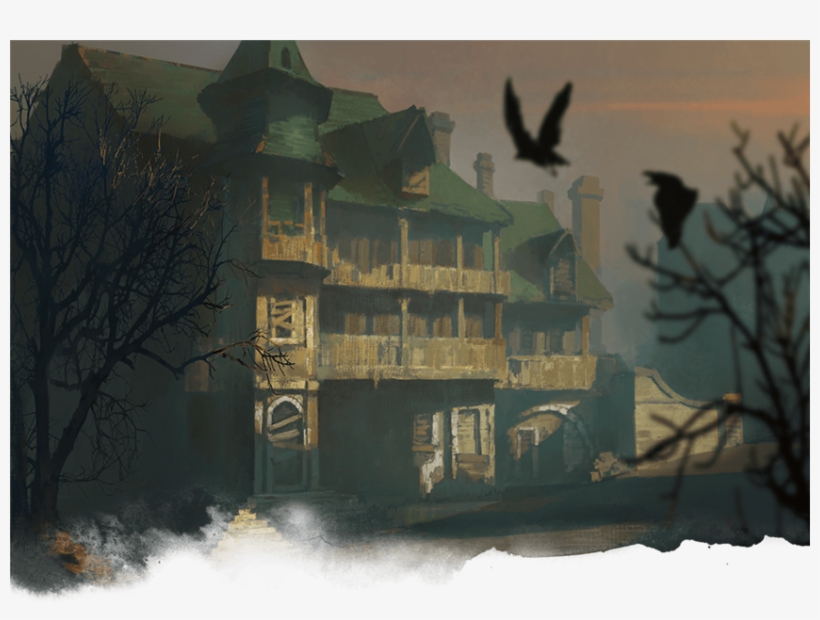
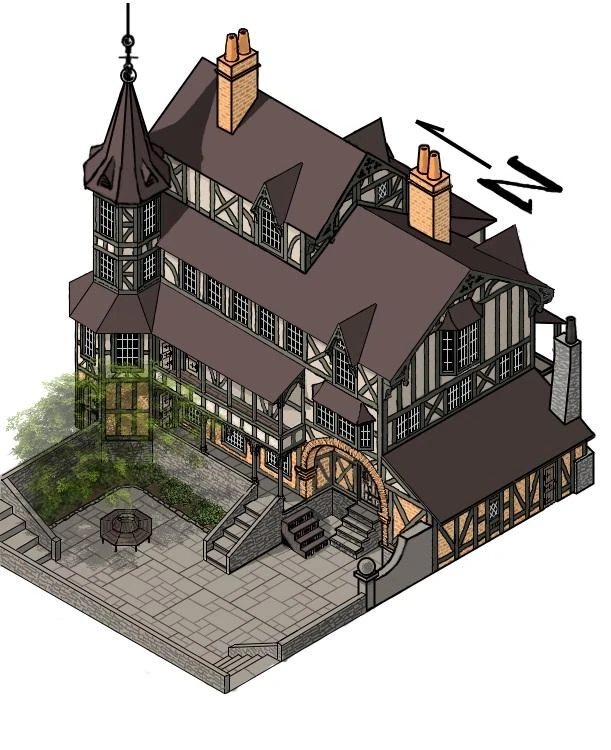

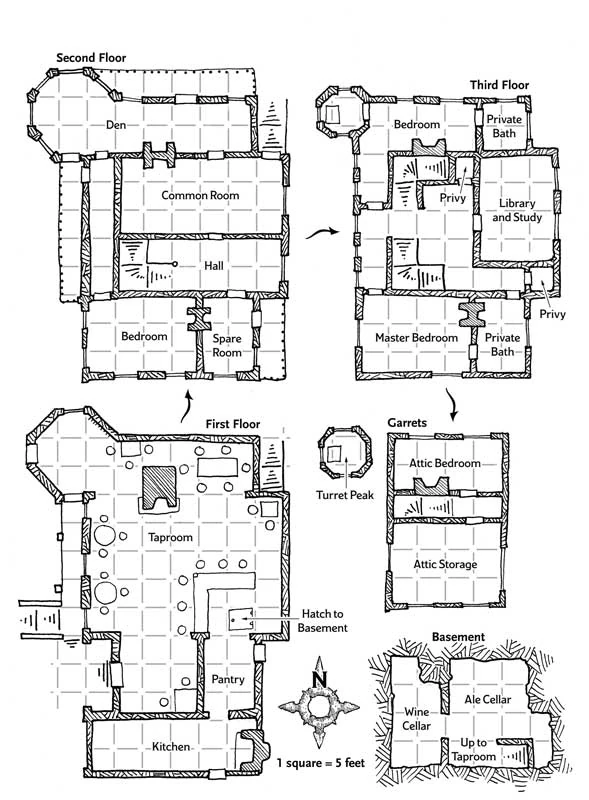
Erwaren's Rest Residents
- Guy Buddie, Emir d'Amour, Thomas Nielson Alley
- Brendaniel Skwik and his goggles
- Lif Erwaren, poltergeist, ex-owner of Trollskull Manor
- Adalbert "Orin" Teppichverkäufer, emo gnome teenager
- Ethel "Nails" Carpenter, middle-aged human, ex-Watch, recovering "Heroes' Dust" addict
- Llethen Rain-Seeker, dragonborn, niece of Rishaal
- D'astral "The Hulk" Timbershade, wood elf, gladiator who trained under Guy
- Marblepaw, quadruped Tabaxi medicine cat, Tom's distant(?) cousin.
- Doug "Snout" Stoutkettle, were-chihuahua, Shard Shunner
- Macadrian "Mac" Blair, were-scottish terrier, Shard Shunner
- Noska Ur'Gray, deep iron dwarf, ex-Xanathar, semi-willingly on parole for community service
- Wishes, faerie dragon, former resident of the Pink Flumph theater


Trollskull Alley Shop Owners
- Talisolvanar "Tally" Fellbranch, carpenter, owner of The Bent Nail
- Embric, weaponsmith, co-owner of Steam and Steel (at night, at sunrise)
- Avi, armorsmith, co-owner of Steam and Steel
- Fala Lefaliir, herbalist, owner of Corellon's Crown (at night)
- Vincent Trench (1, 2), detective, owner of The Tiger's Eye
- Rishaal the Page-Turner, mage, owner of the Book Wyrm's Treasure (1, 2, at night, back entrance)


Trollskull Alley Residents
- Anna Gable, medium who ran the seance to contact Lif
- Lorelai Green, human farmer, ex-lover of Lif and current lover of Embric
- Jezrynne Hornraven, wealthy wife who witnessed the Nimblewright
- Martem Trec, child who found the Necklace of Fireballs
- Tomassin Gralhund, daughter of the Gralhund family, has a crush on Emir
- Halgraek Barrelshoulder, dwarf who had the troll skull
- Brigid Mountainshear, Halgraek's mortal enemy (she has a nicer house)
- Florence Ableton, saved Tom's life, got invited to Erwaren's Rest. Has 14 and 16 year old boys.
- The Teppichverkäufer Family, across-the-street neighbors
- Luitpold Teppichverkäufer, gnome carpet seller
- Ingeborg Teppichverkäufer, gnome housewife
- Gertrudis Teppichverkäufer, bratty gnome preteen
- Dietmar Teppichverkäufer, gnome toddler


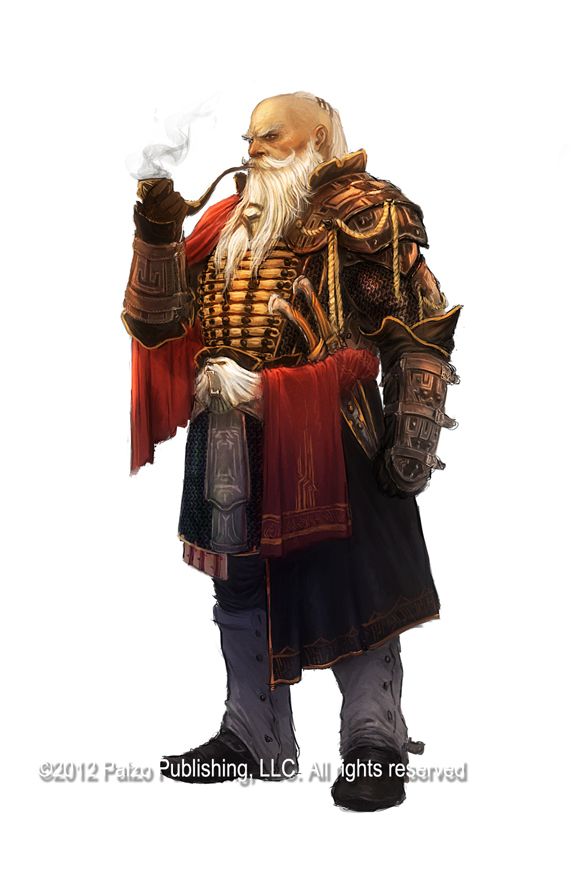


Waterdeep
Friendly NPCs
- Uncle David, (aka Lord Jared)
- Volothamp Geddarm
- Floon Blagmaar
- Renaer Neverember
- Yendan Snazzyfeet
- Ulkoria Stronemarrow, representative for the Watchful Order of Magists and Protectors
- Shard Shunners, pack of weredogs
- Dasher Snobeedle, were-irish terrier, alpha
- Vaniel Shortwick, were-papillon, Dasher's Lover
- Shitzu, possibly interested in being a Secret Agent Shitzu
- Jack Russell Terrier, mohawked halfling with a pointy beard
- Chihuahua
- Grinda Garloth, treasure hunter
- Mary Pickford, plays the handmaiden in Kiss of the Lamia, friendly with Emir


Daggerford
- Lord Zelraun Roaringhorn, et by warrwuffs
- Duchess Morwen of Daggerford


Fanart Gallery


